Understanding Common Saltwater Aquarium Problems: An Overview
Every saltwater aquarist eventually confronts a problem that threatens their pristine marine ecosystem. Most issues like algae, cloudy water, or stressed livestock are not random events but symptoms of an underlying imbalance in your tank. The key to successful troubleshooting is identifying the root cause, not just treating the visible symptom, allowing you to restore stability and prevent future occurrences.
Our 25 years of combined reefing experience have taught us that a successful aquarium is a stable one. Problems arise when one or more pillars of that stability—water parameters, nutrient control, or lighting—falters. This guide breaks down the most common issues we see in the Salt Lake City area and provides the expert-backed steps to solve them.
The Importance of Early Detection and Regular Monitoring
The best way to fix a major aquarium problem is to catch it when it’s still minor. Daily observation is your most powerful tool; a five-minute check on your fish’s behavior, coral polyp extension, and equipment function can alert you to trouble hours or days before it spirals. Small, consistent actions are what separate a struggling tank from a thriving one.
This is the foundation of our professional maintenance philosophy. We build meticulous care routines that focus on proactive monitoring and consistent water quality management. By establishing a baseline of what a “healthy” tank looks like, you can immediately spot deviations and act before they become disasters.
What We’ll Cover:
- Tackling Algae Outbreaks in Your Saltwater Tank
- Resolving Cloudy or Murky Water in Saltwater Aquariums
- Diagnosing and Fixing Water Parameter Imbalances
- Troubleshooting Common Fish and Coral Health Problems
- Preventative Measures: Avoiding Saltwater Aquarium Issues
- When to Seek Professional Help
- Your Top Troubleshooting Questions Answered
- From Troubleshooting to a Thriving Reef
Tackling Algae Outbreaks in Your Saltwater Tank
An algae outbreak can quickly turn a beautiful display into a green or brown mess, frustrating even seasoned hobbyists. Algae is not an enemy but an indicator, signaling an excess of nutrients in your system. Understanding what feeds it is the first step toward eliminating it for good.
Identifying Different Types of Algae
Correctly identifying the type of algae is crucial, as the solution varies for each. Our certified reef specialists most commonly encounter a few key types:
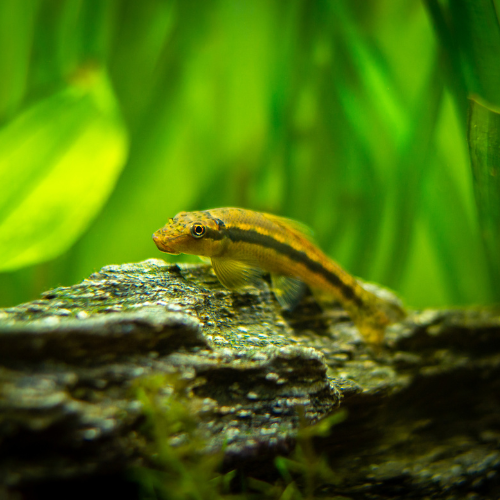
Green Hair Algae (GHA): Fine, thread-like green strands that cover rocks and equipment. It thrives on nitrates and phosphates.
Diatoms (Brown Algae): A dusty brown film that often appears in new tanks. It feeds on silicates present in tap water and new sand beds.
- Cyanobacteria (Red Slime Algae): A slimy, reddish-purple mat that can quickly cover surfaces. It’s a bacteria, not a true algae, that excels in low-flow areas with organic waste.
- Bubble Algae: Small, green, bubble-like sacs that can multiply rapidly if popped, releasing spores into the water column.
Causes of Excessive Algae Growth
Nearly all nuisance algae blooms are fueled by a combination of three factors: light, nitrates, and phosphates. Your lighting schedule may be too long, or the bulbs may be old and have shifted spectrum. More often, the issue is excess nutrients from overfeeding, an inadequate cleanup crew, or insufficient filtration.
A primary source of these nutrients, especially in the Salt Lake valley, is using unfiltered tap water. This is why we are adamant about water quality. Even using tap water for a saltwater tank just once can introduce enough phosphates and silicates to fuel an algae outbreak that lasts for weeks.
Effective Solutions for Algae Control
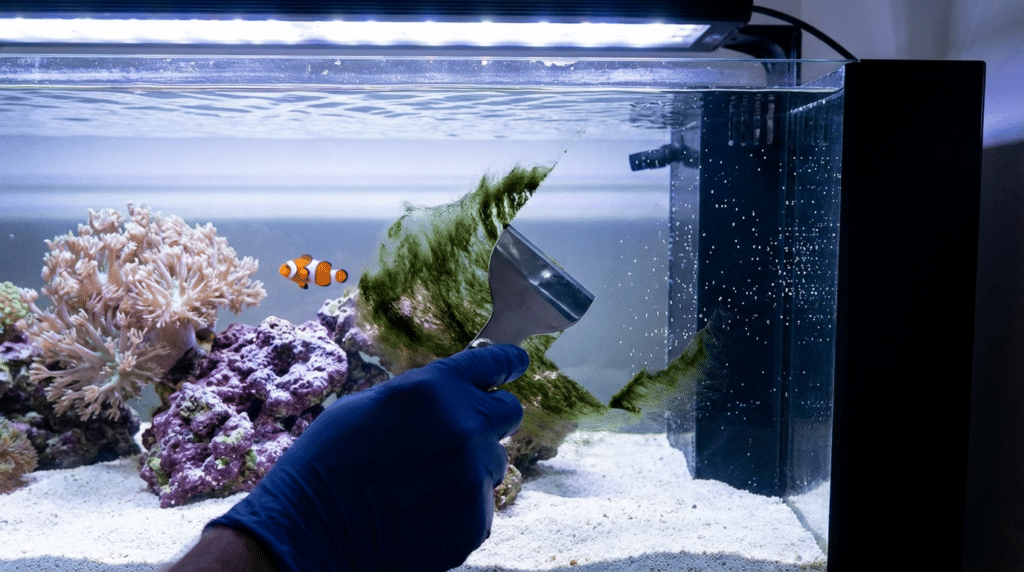
Solving an algae problem requires a multi-pronged attack, not a single quick fix. First, manually remove as much of the algae as you can. For a long-term solution, you must address the nutrient source through a consistent maintenance routine and proper filtration.
Implement these strategies for a cleaner tank:
- Improve Nutrient Export: Ensure your protein skimmer is properly sized and producing dark, thick skimmate. Run phosphate-absorbing media like Granular Ferric Oxide (GFO) or specialized filter pads.
- Control Your Feeding: Feed only what your fish can consume in a minute or two. Use high-quality foods that are less likely to break down and foul the water.
- Perform Regular Water Changes: Use only high-purity Reverse Osmosis Deionized (RO/DI) water for changes and top-offs. This dilutes accumulated nutrients and replenishes trace elements.
- Deploy a Cleanup Crew: Add snails, hermit crabs, and certain fish (like tangs or blennies) that are appropriate for your tank size and specifically target the type of algae you have.
For stubborn outbreaks that don’t respond to these methods, our expert algae removal services can restore balance to your system. We use professional techniques and develop a long-term prevention plan tailored to your aquarium.
Resolving Cloudy or Murky Water in Saltwater Aquariums
Cloudy water in a saltwater tank is alarming, obscuring the view of your prized fish and corals. This issue almost always falls into one of three categories: a bacterial bloom, suspended particles, or microbubbles. Determining the cause is essential for clearing it up quickly.
Pinpointing the Source of Cloudiness
Look closely at the water to diagnose the problem. A milky, white haze is typically a bacterial bloom, common in new tanks or after a large disturbance that releases organic waste. If you can see tiny individual flecks or specks floating around, it’s suspended particulate matter like sand, dust, or uneaten food. Lastly, if the cloudiness is a shimmering mass of tiny bubbles, you are dealing with microbubbles from your equipment.
Methods for Achieving Crystal Clear Water
Achieving crystal-clear water is about targeting the specific cause of cloudiness. For a bacterial bloom, the best course of action is often patience; the bloom will subside as your biological filter matures and consumes the excess nutrients. Running a protein skimmer effectively and reducing feeding will speed up the process.
To capture suspended particles, mechanical filtration is your best friend. Add a filter floss or a fine filter sock to your sump to physically trap the debris. A canister filter or media reactor filled with polishing pads can also clarify the water within hours. Ensure your powerheads are not aimed directly at the sandbed, as this can continually stir up detritus.
Microbubbles are an equipment issue. Check that the water level in your sump’s return pump chamber is high enough to prevent it from sucking in air. Inspect all plumbing connections for air leaks, especially on the intake side of pumps. A properly designed sump will include bubble traps to prevent this from reaching the display tank.
Diagnosing and Fixing Water Parameter Imbalances
The most devastating saltwater aquarium problems are often invisible. Unstable water parameters put immense stress on fish and corals, leading to disease, stunted growth, and even tank crashes. Meticulous water quality management is the cornerstone of a thriving marine ecosystem.
Understanding New Tank Syndrome: What It Is and How to Cope
New Tank Syndrome is the hazardous period when a new aquarium’s biological filter establishes itself. It describes the natural process of the nitrogen cycle, in which beneficial bacteria break down toxic waste. This process involves a predictable spike in ammonia, followed by a spike in nitrite, and finally a rise in less-toxic nitrate.
Story, Teach, Breakthrough Insight: Many beginners, eager to add fish, rush this critical stage. Adding livestock before the cycle is complete results in fish being exposed to lethal levels of ammonia and nitrite, causing stress, disease, and death. This is the single most common—and entirely preventable—mistake we help new hobbyists avoid. The “breakthrough” is realizing the tank isn’t ready for fish until ammonia and nitrite consistently test at zero.
Patience is the only cure. Allow your tank to cycle fully for 4-8 weeks by adding a source of ammonia, such as fish food or a bottled bacterial starter. Test the water regularly until ammonia and nitrite fall to zero and nitrate begins to appear. Only then is it safe to slowly add your first hand-selected livestock.
Addressing Salinity Levels: When Is 1.020 Too Low?
A specific gravity of 1.020 is generally too low for a reef aquarium and most saltwater fish. While some hardy species like clownfish might survive at this level, it is far from optimal and places them under constant osmotic stress. Fish must work harder to regulate their internal fluids, weakening their immune systems over time.
For a healthy mixed reef tank, we target a stable salinity between 1.025 and 1.026. This level provides the correct balance for fish health and is essential for corals to utilize calcium and alkalinity for skeletal growth. Drastic swings in salinity are more dangerous than a stable but slightly off number, so any adjustments should be made slowly over several days.
The Impact of Low Magnesium on Reef Tanks
If magnesium levels are too low in a reef tank, it becomes nearly impossible to maintain stable alkalinity and calcium. Magnesium acts as a buffer, preventing calcium and carbonate ions from precipitating out of the water and becoming unavailable to your corals. Without sufficient magnesium, you will find yourself constantly dosing alkalinity and calcium with little effect, and pH will be prone to wild swings.
Corals will show clear signs of stress, including poor polyp extension, slow growth, and reduced coloration. We test for magnesium as part of our comprehensive weekly and bi-weekly maintenance packages because we know it’s a critical, yet often overlooked, component of a stable reef environment.
Other Critical Parameters: pH, Alkalinity, and Calcium
These three parameters are interconnected and vital for coral health. pH measures water acidity, and stability is more important than a specific number; a reef tank should ideally stay between 8.1 and 8.3. Alkalinity (dKH) is the water’s buffering capacity, or its ability to resist downward pH swings. Calcium is the primary building block for coral skeletons and coralline algae.
Regular testing and dosing are required to keep these in balance, especially in tanks heavily stocked with stony corals. Maintaining this delicate balance is a core part of our professional service, saving you the hassle and guesswork of daily chemical adjustments.
Troubleshooting Common Fish and Coral Health Problems
Signs of distress in your fish and corals are the final, most urgent alarm bells that something is wrong in your aquarium. Addressing these signs requires quick observation and a calm, methodical approach to identify the source of the stress.
Identifying Signs of Stress and Disease in Fish
Healthy fish are active, eat eagerly, and have vibrant colors. Signs of stress or illness are often subtle at first but can escalate quickly.
-
Hiding or Lethargy: Fish that constantly hide or appear listless may be bullied by tank mates or be suffering from poor water quality.
-
Rapid Breathing: Gill movement that is fast and labored can indicate low oxygen levels, elevated ammonia/nitrite levels, or parasitic infections.
-
White Spots (Ich): Cryptocaryon irritans, or marine ich, appears as tiny white salt-like specks on the fish’s body and fins. It is highly contagious and often triggered by stress.
-
Clamped Fins: Fish that hold their fins tightly against their bodies are signaling discomfort or illness.
The best defense is a quarantine tank for all new arrivals and a stable, stress-free environment. All the exotic saltwater fish at our Salt Lake City store are hand-selected and carefully monitored to ensure they are healthy before they go to a new home.
Coral Bleaching and Detachment: Causes and Solutions
When corals lose their color (bleaching) or begin to detach from their base, it is a sign of severe stress. This is the coral expelling its symbiotic algae (zooxanthellae) in response to unfavorable conditions. The most common culprits are sudden changes in lighting, temperature, or water parameters.
“Light shock” from moving a coral into intense lighting too quickly is a frequent cause. Other factors include temperature spikes from a faulty heater or swings in alkalinity, calcium, or salinity. The solution is to identify the stressor and restore stability immediately. This often requires careful diagnosis, something our aquarium consultation services are designed to assist with.
Preventative Measures: Avoiding Saltwater Aquarium Issues
The secret to a stunning, problem-free aquarium is not being a master troubleshooter—it’s creating a system where problems rarely occur. Proactive prevention through consistent maintenance and smart choices is far less stressful and more rewarding than reactive problem-solving.
Maintenance Routines for a Healthy Aquarium
Consistency is everything. A disciplined weekly routine is the single most effective way to prevent common aquarium issues. This schedule forms the backbone of the thriving marine ecosystems we manage for clients across Utah.
Your weekly checklist should include:
-
A 10-20% water change using RO/DI saltwater mixed to the correct temperature and salinity.
-
Testing key parameters: salinity, alkalinity, calcium, magnesium, nitrate, and phosphate.
-
Scrubbing algae from the glass and rocks.
-
Emptying and cleaning the protein skimmer collection cup.
-
Visually inspect all livestock for signs of stress or disease.
-
Checking all equipment to ensure it is functioning correctly.
This routine is fundamental to success. We’ve detailed the process in our guide on how to maintain a salt water fish tank for hobbyists who want to master the craft.
Choosing the Right Equipment and Livestock
Preventing problems starts before the tank is even wet. Investing in quality equipment from the beginning saves countless headaches and future expenses. An undersized protein skimmer, an unreliable heater, or cheap powerheads are common points of failure that can lead to disaster.
The same principle applies to livestock. Adding unhealthy, un-quarantined fish is the fastest way to introduce disease into an established system. We pride ourselves on offering only healthy, hand-selected aquatic life because we know that quality inputs are essential for a quality outcome. When designing your aquarium, planning for robust filtration and selecting compatible, healthy animals creates a foundation for long-term success.
When to Seek Professional Help
Even with diligent care, some situations require a level of expertise or equipment beyond the average hobbyist’s. Recognizing when to call a professional is not a sign of failure, but a smart decision to protect your investment and the health of your marine life. Our team has the experience and tools to solve complex issues efficiently.
Consider seeking professional help for:
-
Persistent problems like algae or cloudy water that don’t resolve with standard methods.
-
Unexplained livestock deaths or disease outbreaks that you cannot diagnose.
-
Complex plumbing jobs, like installing a new sump or filtration system.
-
Tank relocations or major system upgrades.
-
Vacation servicing to ensure your tank remains stable while you are away.
Our goal is to be a reliable partner for Utah’s aquarist community. Whether you need a one-time consultation, emergency help, or a comprehensive maintenance plan, our full spectrum of aquarium services is designed to provide peace of mind.
Your Top Troubleshooting Questions Answered
Utah’s arid climate causes a high rate of water evaporation from aquariums. As pure water evaporates, the salt is left behind, causing salinity to steadily rise. An auto-top-off (ATO) system is not a luxury here; it is essential equipment for maintaining stable salinity by replacing evaporated water with fresh RO/DI water.
If your corals suddenly retract or lose color, test your alkalinity (dKH) first. It is the parameter that tends to be consumed most quickly and can drift rapidly, causing immediate stress to corals. After alkalinity, check salinity and temperature, as these are other common culprits for sudden changes in coral behavior.
No, you should never use freshwater kits for a saltwater aquarium. The chemical reagents are formulated differently and will provide inaccurate, misleading results. Always invest in test kits specifically designed for marine or reef aquariums to ensure you are getting reliable data on your water parameters.
Municipal tap water in the Salt Lake City region contains a high level of dissolved solids, including phosphates, silicates, and nitrates. While safe for human consumption, these elements act as fertilizer for nuisance algae in a saltwater aquarium. Using RO/DI water removes nearly all of these contaminants, giving you a clean slate and preventing many common algae and water-quality issues.
For a week-long trip, ensure your ATO reservoir is full. Use an automatic fish feeder or pre-portioned food for a tank-sitter. Perform a water change and clean the tank right before you leave. Most importantly, check that all equipment is running perfectly. For complete peace of mind, our maintenance team offers vacation service to keep your tank pristine while you’re away.
Professional maintenance is an investment in stability and peace of mind. For busy professionals or those with large, complex systems, it eliminates the single biggest cause of tank failure: inconsistent care. Our service prevents costly mistakes, saves you hours of work each month, and leverages 25+ years of expertise to ensure your livestock thrives and protects your investment for years to come.
From Troubleshooting to a Thriving Reef
Troubleshooting is a natural part of the aquarium hobby, but it shouldn’t define your experience. By understanding the root causes of common problems and focusing on prevention through consistent maintenance, you can spend less time fighting issues and more time enjoying the beauty of your vibrant marine ecosystem.
Every problem is a learning opportunity that deepens your understanding of the delicate balance within your tank. Whether you need expert advice for a specific issue, high-quality livestock and equipment, or a partner to manage your system, we are here to help.
Let us help you create the aquarium of your dreams. Our team of certified reef specialists is ready to provide the guidance and support needed to turn any tank into a thriving piece of the ocean. Call us for a consultation and see how our meticulous approach can make a difference.
Related Reads:

OCD Reefs offers high-quality saltwater aquarium installation and maintenance at a competitive price. Our store in Salt Lake City provides saltwater fish, coral, and aquarium supplies. With over 25 years of combined industry experience, we have built our business on honesty, reliability, and passion.
Follow Us
Latest posts by OCD Reefs (see all)
- Saltwater Aquarium Troubleshooting: Tackling Algae, Cloudy Water, and Other Common Issues - March 20, 2026
- Is Tap Water OK for a Saltwater Tank? - October 9, 2025
- Should I Get Blue or White Light for My Saltwater Aquarium? - September 5, 2025